

+918048059198

Currently it only shows your basic business info. Start adding relevant business details such as description, images and products or services to gain your customers attention by using Boost 360 android app / iOS App / web portal.

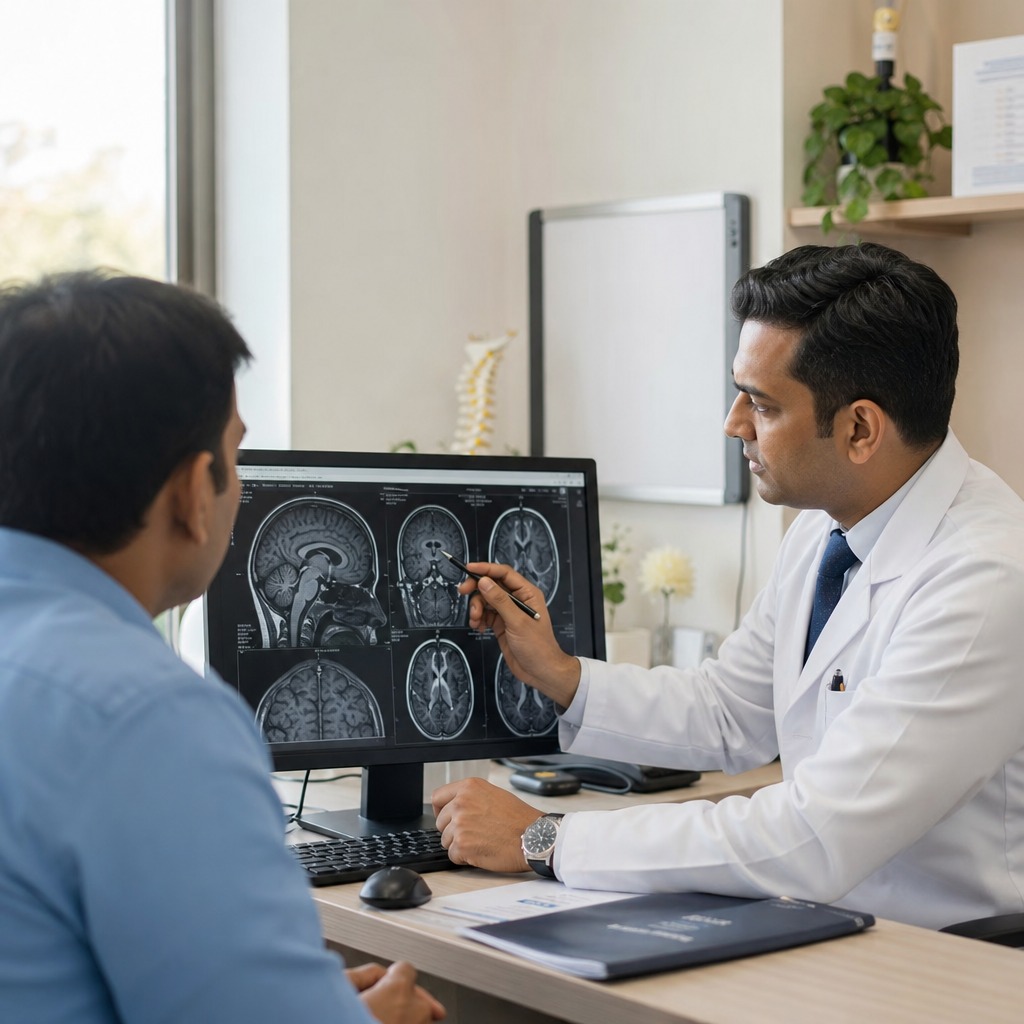
A brain tumor can sound frightening—especially when you’re trying to understand what kind of treatment is possible and who should manage your care. If you’re searching for a brain tumor surgeon in Pune, you’re likely asking questions like: - Do I need neurosurgery or can this be treated with medicines/radiation? - What types of brain tumors require an operation? - How do surgeons decide between microscopic vs endoscopic “keyhole” approaches? - What risks should I understand before consenting? - How is recovery typically managed? This guide breaks down the practical, patient-focused realities of brain tumor surgery—so you know what to discuss with a specialist and what information to prepare. --- 1) First: “Brain Tumor” Doesn’t Mean One Single Disease The term brain tumor includes many different conditions. Some are cancerous, some are benign (non-cancerous), and some are metastases (tumors that spread to the brain from elsewhere). A key point: treatment depends heavily on tumor type, location, size, and your symptoms, not just the word “tumor.” Common categories include - Gliomas (often arise from brain tissue) - Meningiomas (often arise from the meninges/coverings of the brain) - Schwannomas (commonly in/near cranial nerves) - Pituitary tumors (important because surgery can be transsphenoidal/keyhole) - Brain metastases (from lung, breast, kidney, etc.) - CNS lymphomas and other rarer types Why this matters: A tumor in the brainstem is managed very differently from a surface tumor; a slow-growing tumor may require a different plan than an aggressive one. --- 2) What a Brain Tumor Surgeon Actually Does (Beyond “Operating”) When you consult a brain tumor surgeon, your care typically involves more than the surgery itself. A specialist usually coordinates: - Symptom assessment (headache pattern, seizures, weakness, balance, vision changes) - Neurological exam (strength, sensation, reflexes, coordination, language) - Imaging review - MRI with contrast is commonly central for brain tumors - CT may be used for emergencies or surgical planning - Treatment planning with a multidisciplinary team - Neurosurgery - Neuro-oncology - Radiation oncology - Neuropathology/radiology - Sometimes endocrinology (for pituitary lesions) “Resection” is not always the first goal Surgeons weigh: - Can the tumor be removed safely? - Would surgery improve symptoms or survival? - Is the tumor best treated first with radiation/chemotherapy? - Is biopsy safer than complete resection in a high-risk location? --- 3) How Surgeons Decide Whether Surgery is Needed Surgeons use several factors to recommend surgery. Common reasons for neurosurgery - Mass effect: swelling/pressure causing worsening symptoms - Hydrocephalus: fluid buildup in the brain - Symptomatic lesions: seizures, progressive weakness, language difficulty - Tumors where tissue diagnosis is essential - Tumors that can be safely debulked or removed without major functional loss When surgery may be limited or avoided - Tumors located in areas where removal would cause unacceptable neurological deficits - Tumors that are very responsive to radiation/medical therapy - Certain elderly/frail cases where risks outweigh benefits (this is individualized) --- 4) Microscopic vs Endoscopic / Keyhole Approaches: What’s the Difference? You may hear terms like microscopic neurosurgery, endoscopic surgery, and minimally invasive “keyhole” techniques. The goal is usually the same: maximum safe tumor control with minimal trauma. Microscopic neurosurgery - Uses an operating microscope for precision - Often used for many intracranial tumor locations - Allows detailed dissection around critical structures Endoscopic / minimally invasive approaches - Uses an endoscope (camera-assisted technique) - Can be beneficial in select locations where the anatomy allows access through smaller corridors - Particularly relevant for some skull base and deep midline lesions Important: “Endoscopic” isn’t automatically better. The best approach depends on tumor position, vascular involvement, and how close it is to nerves and brain tissue. --- 5) Skull Base Tumors and Pituitary Lesions: Why Location Changes Everything If you’re searching for a brain tumor surgeon in Pune, you may also be dealing with tumors near the skull base or pituitary region—areas with dense nerve pathways and critical blood vessels. Skull base tumors often require specialized planning Because the skull base is close to: - Cranial nerves - Major arteries and veins - Complex anatomical spaces Surgeons may use combined microscopic and endoscopic strategies in carefully selected patients to reduce brain retraction and improve access. Pituitary tumors Some pituitary tumors can be treated through transsphenoidal surgery (a corridor through the nasal passages), which is a form of minimally invasive surgery in appropriate cases. --- 6) Risks to Discuss Before Brain Tumor Surgery Every surgery carries risk. A thorough consultation should cover risks specific to your tumor location. Risks may include - Infection (general surgical risk) - Bleeding / hematoma - Neurological deficits - weakness, numbness - speech/language problems - vision changes - balance issues - Seizures (sometimes pre- or post-operative) - CSF leak (especially in skull base approaches) - Swelling leading to temporary symptom worsening - Hormonal issues (particularly with pituitary and near-pituitary surgery) A good surgeon will discuss: - what risks are most likely in your case, - how they reduce risk, - and what the plan is if complications occur. --- 7) What Post-Operative Recovery Can Look Like Recovery varies based on tumor type, extent of resection, and whether the tumor affected brain function before surgery. Typical phases - Immediate post-op monitoring - neurological checks - management of pain, headache, nausea - Imaging - MRI/CT may be used to confirm post-surgical status - Rehabilitation - if any weakness, speech, or coordination issues persist - physiotherapy, occupational therapy, speech therapy - Follow-up with oncology - Many tumor types need radiation and/or chemotherapy depending on pathology A common misconception Some people assume removing a brain tumor means “done forever.” In reality, many brain tumors are managed with a long-term plan guided by tumor grade and biology. --- 8) Preparing for Your Appointment (Practical Checklist) Bring or prepare: - MRI reports (and images if possible) - A list of symptoms with timelines (when headache started, seizure dates, progression) - Current medications and allergies - Any history of diabetes, blood pressure issues, bleeding disorders, or anticoagulant use - If you have had prior cancers, bring those records too Questions you can ask your surgeon: - What is the most likely tumor type based on imaging? - Do I need biopsy or resection? - What surgical approach fits my tumor location and why? - What are the expected risks in my case? - Will I need radiation or chemotherapy afterward? - How will my recovery be supported (rehab plan)? --- 9) Why Choosing the Right Specialist Matters (Especially for Brain Tumors) Brain tumors are not one-size-fits-all. The “right” surgeon is often the one who: - regularly manages complex brain tumor cases, - understands multidisciplinary care (neuro-oncology + radiation + pathology), - can tailor surgical strategy to location and function, not just tumor size. In Pune, many patients look for a brain tumor surgeon with both microsurgical precision and experience with advanced approaches when needed. For example, when tumors involve complex regions (such as skull base), the ability to coordinate endoscopic techniques alongside microscopic surgery can be an important part of planning. In local consultations, patients may also find specialists like Dr Sarang Rote-Best Neurosurgeon In Pune who focus on tumor care in addition to cerebrovascular and stroke-related neurointervention—useful when complex vascular anatomy is involved in surgical planning. (Your own case should drive the final decision.) --- 10) When to Seek Urgent Care If you (or a family member) have a suspected brain tumor and experience any of the following, seek urgent medical evaluation: - new or worsening seizures - sudden weakness, trouble speaking, or confusion - severe headache with vomiting - rapidly progressive neurological symptoms - signs of increased pressure (worsening drowsiness, balance failure) --- Final Takeaway If you’re searching for a brain tumor surgeon in Pune, your best next step is not just choosing a name—it’s understanding your tumor’s type, location, and goals of treatment (diagnosis vs removal vs symptom relief). A strong consultation should clearly explain: - what the tumor likely is, - what surgery can realistically achieve, - what risks apply to your anatomy, - and what the complete treatment pathway looks like afterward. If you want, tell me: 1) the tumor location mentioned in your MRI report, 2) the age of the patient, and 3) the main symptoms (headache, seizures, weakness, vision issues, etc.). I can help you translate the report into clear, discussion-ready questions for your neurosurgeon.


